MINNAAR CHESS
The Sovereign Alliance
A Game of Sovereigns
An Original Strategy Game Inspired by Chess
Every Individual Is Sovereign.
The Evil Empire Seeks to Divide. The Sovereigns Choose to Unite.
LEARN TO PLAY PLAY MINNAAR CHESS

The idea
Minnaar Chess is an original strategy game inspired by chess, with its own rules, objectives and philosophical meaning.
Sixteen Sovereigns, in two groups of eight, face sixteen allied pieces of the Evil Empire. The Evil Empire can win only by dividing the Sovereigns; the Sovereigns can win only together. The game rewards independent judgement, tactical intelligence and voluntary cooperation.
The Evil Empire strikes first. The Sovereigns unite in defense of their freedom.
What the Sides Represent
The Sovereigns represent individuals who govern their own lives and respect the sovereignty of others.
The Evil Empire represents individuals and organizations that do not respect individual sovereignty—the rights of every person to life, liberty, and property.
Every Individual Is Sovereign.
The Evil Empire Seeks to Divide. The Sovereigns Choose to Unite.
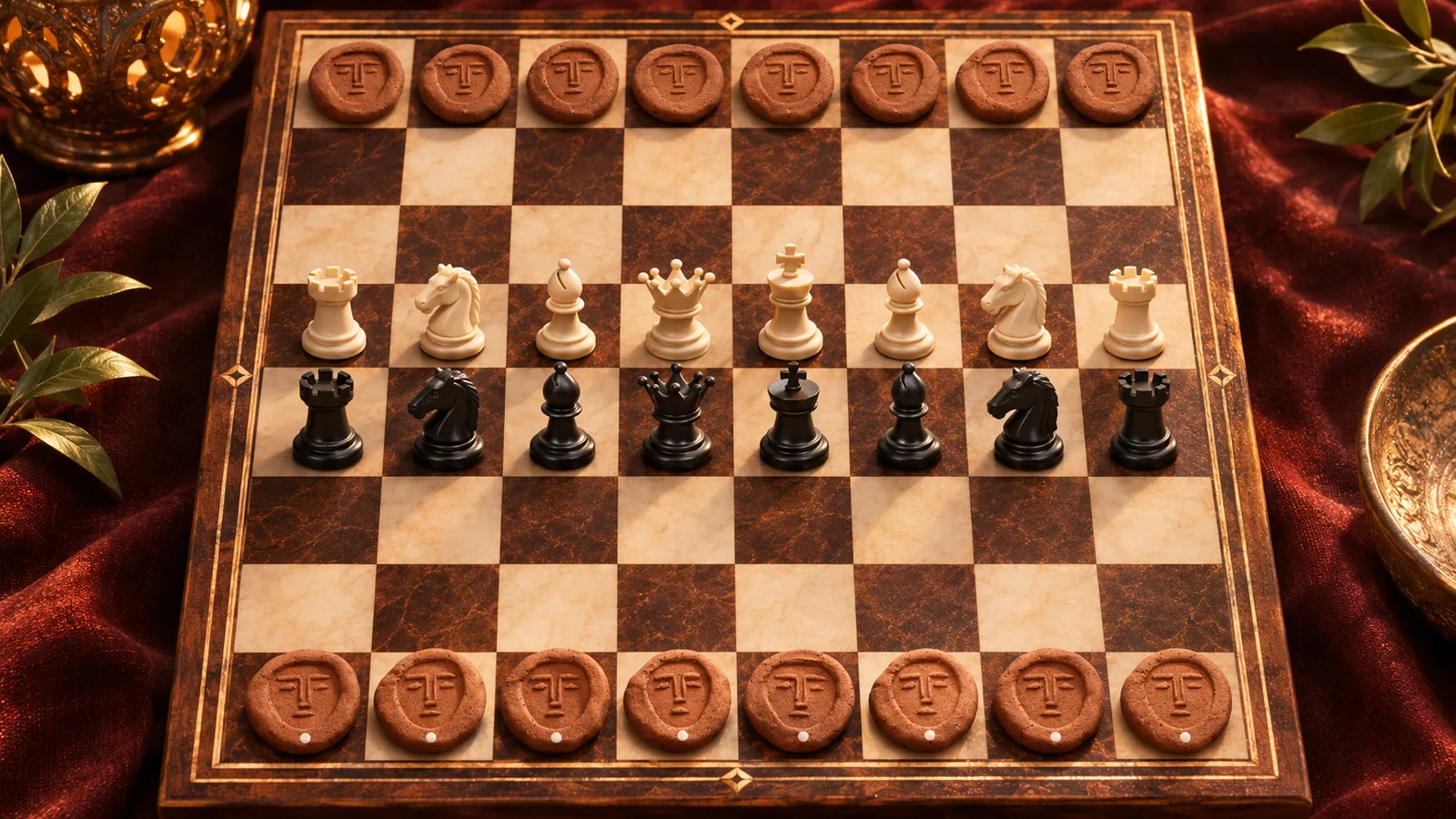
The starting arrangement
The Evil Empire stands in the centre of the battlefield, its two allied armies back to back, each facing outward toward the Sovereigns. The Sovereigns surround it from opposite sides.
- Rank 8: the eight Northern Sovereigns (plain).
- Rank 5: the eight White Evil Empire pieces.
- Rank 4: the eight Black Evil Empire pieces.
- Rank 1: the eight Southern Sovereigns (with the small white dot).
- Ranks 2, 3, 6 and 7 begin empty.
Each Evil Empire army stands in the traditional back-rank order, from the a-file to the h-file: Rook, Knight, Bishop, Queen, King, Bishop, Knight, Rook. The Queens stand on the d-file and the Kings on the e-file.
The basic rules
How a Sovereign moves
Each Sovereign moves and captures like a chess Queen, but no more than four squares in one move. All sixteen Sovereigns have exactly the same powers.
- A Sovereign moves along a rank, a file or a diagonal, up to four squares, over empty squares.
- The same limit applies to moving and to capturing. Count the squares the Sovereign passes over and the one it lands on, from the square it stands on; over several turns it may go anywhere.
- A Sovereign cannot jump over pieces, and cannot capture another Sovereign or share its square.
- A Sovereign captures Evil Empire pieces of either colour.
How the Evil Empire moves
Every Evil Empire piece has its full traditional chess movement and capturing powers from the very beginning of the game, including on its first turn. There is nothing to activate.
- King: one square in any direction.
- Queen: any distance along a rank, a file or a diagonal, over empty squares.
- Rook: any distance along a rank or a file, over empty squares.
- Bishop: any distance along a diagonal, over empty squares.
- Knight: the L-shaped jump (two squares one way and one at a right angle), over any pieces.
- Sliding pieces cannot move through occupied squares. Only the Knight jumps.
- White and Black Evil Empire pieces are allies: they cannot capture one another or move onto a square an ally occupies. They capture Sovereigns only.
- A King can be captured like any other Evil Empire piece. There is no check and no checkmate, and capturing a King does not end the game.
- There is no castling, no promotion and no en passant.
Turns
The Evil Empire strikes first. The Sovereigns unite in defense of their freedom. The White Evil Empire makes the first move of the game, and the Sovereigns answer. The four turns repeat, from the first move of the game: 1. White Evil Empire; 2. Southern Sovereigns; 3. Black Evil Empire; 4. Northern Sovereigns. One complete round is these four turns.
There are no compulsory opening moves and no preliminary turns. On its turn a group moves one of its pieces: a Sovereign group moves one of its own Sovereigns, and an Evil Empire army moves any one of its pieces that can move.
- A group may pass only when it has no legal move. Passing is never a choice: a group that can move must move. A forced pass counts as a turn.
- Four forced passes in a row end the battle undecided: THE STRUGGLE CONTINUES.
Winning
There are two decisive victories. They are the same however the game is played.
- Victory by Liberation: the Sovereign Alliance wins when all 16 Evil Empire pieces have been captured. THE SOVEREIGN ALLIANCE PREVAILS. Liberation Achieved!
- Victory by Divide and Conquer: the Evil Empire wins when all eight Sovereigns of either originating group have been captured, even if the other group is untouched. THE EVIL EMPIRE PREVAILS. Divide and Conquer!
The Struggle Continues
Some battles reach an impasse. If 80 turns in a row pass without a capture, counting each faction's turn on its own (80 individual turns, which is 20 complete rounds of 4 turns), the battle ends undecided and no one is declared the winner: THE STRUGGLE CONTINUES. This battle has reached an impasse. Another battlefield awaits.
- Any capture, by either side, starts the count again from nothing. A capture in the middle of a round simply restarts the count at that turn.
- The count is of individual turns, not of rounds, so a battle can end in the middle of a round.
- Every turn counts, including a turn on which a group had no legal move and passed.
- Neither Liberation nor Divide and Conquer is awarded for the pieces that remain. Counting pieces never decides a battle.
- At a table, the human players may end a battle by agreement. On the website, the End Battle button ends a battle by choice. Either way the result is undecided: THE STRUGGLE CONTINUES, never a victory.
- Then NEW BATTLEFIELD: a fresh game with the same rules and the same starting arrangement.
- At a table, count the 80 turns one by one, starting again at every capture. "Counting the 80 turns at a table" in the official rules gives the exact method, and an optional marker method that always gives the same result.
The rules are the same on a screen and on a physical board. Read the complete official rules.
Ways to play
The rules are identical in every way of playing.
On this website
Online Solo
One human controls all 16 Sovereigns against the computer-controlled Evil Empire.
On this website
Online Cooperative
Two humans on the same device cooperate against the computer: one controls the Southern Sovereigns, the other the Northern Sovereigns.
At a table
Physical Two-Player Game
One human controls all 16 Sovereigns, and another human controls all 16 Evil Empire pieces.
At a table
Physical Three-Player Game
Two humans cooperate, each controlling one originating group of eight Sovereigns, and a third human controls all 16 Evil Empire pieces.
On the website the Evil Empire is played by the computer.
Against the Odds
Experienced players can choose an additional challenge at Expert difficulty by beginning with fewer Sovereigns.
Light: Begin with 15 Sovereigns, removing the Northern Sovereign at d8.
Moderate: Begin with 14 Sovereigns, removing the Southern Sovereign at e1 and Northern Sovereign at e8.
All other rules remain unchanged.
The Same Game. Greater Odds.
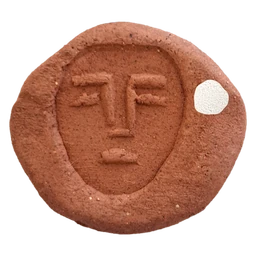
(small white dot)
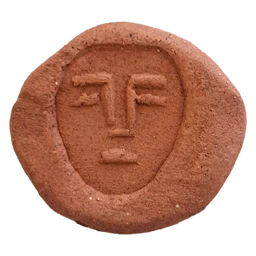
(plain)
Play with an ordinary chess set, or with Sovereign Medallions
Minnaar Chess is fully playable without special equipment. The traditional chess pieces are the Evil Empire, and the sixteen standard pawns are the Sovereigns.
Players may also collect original Sovereign Medallions to replace their pawns: handcrafted stoneware sculptures (face medallions), eight dotted Southern Sovereigns and eight plain Northern Sovereigns. The complete sixteen-medallion arrangement is ideal, but individual medallions and groups of eight remain collectible.
The Sovereign Medallions belong to Minnaar Money — The Art of Freedom. Explore the permanent Minnaar Catalogue.
LEARN TO PLAY PLAY MINNAAR CHESS
Minnaar Money — The Art of Freedom